ron fujikawa: The Life and Legacy of Danny Fujikawa’s Father
Introduction
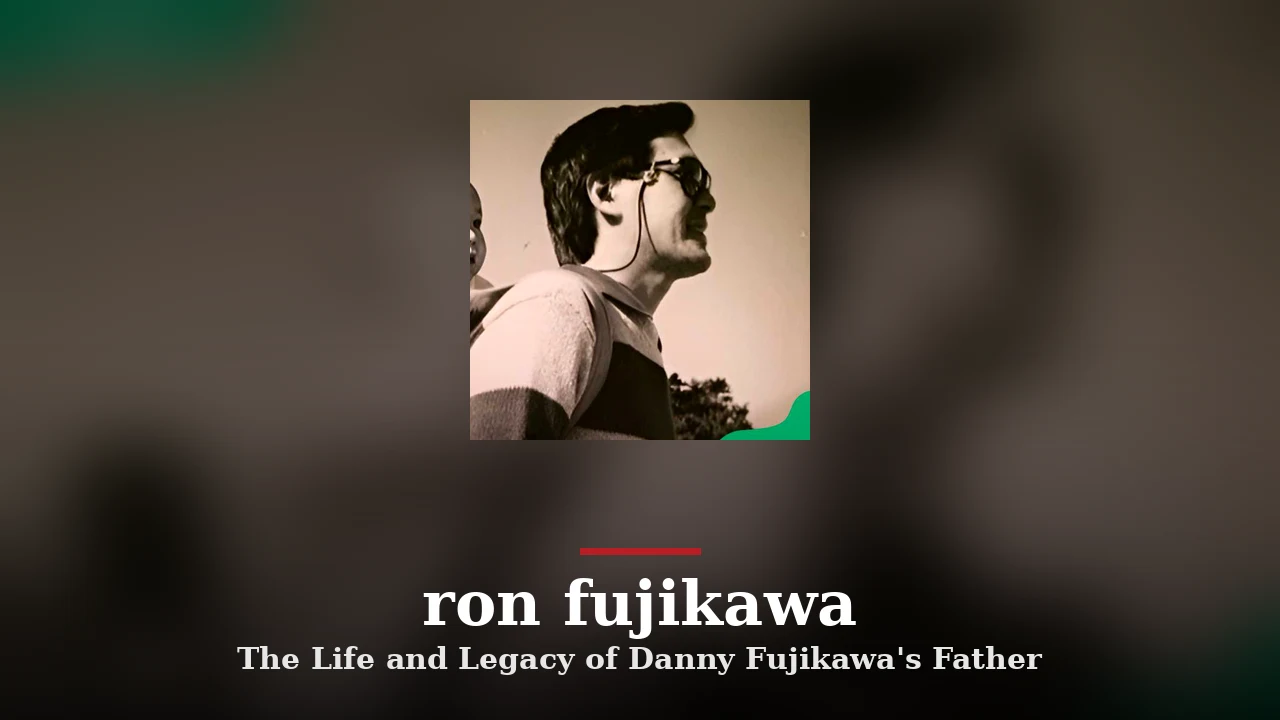
Behind every celebrated family there is often a quiet, accomplished figure whose life story rarely makes the headlines but whose influence shapes everything that follows. Such was the case with the subject of this biography, a respected Los Angeles attorney, a devoted father of three sons, and the patriarch of a family that would one day be connected to one of Hollywood’s most famous names. Born in the American Midwest in the late 1940s to a pioneering Japanese-American family, he built a distinguished legal career in Southern California that spanned more than three decades, founded a law firm, rose to partnership at one of the city’s most prominent firms, and gave back to his community through years of service on school boards. His name became more widely known only after his death, when his musician son’s relationship with actress Kate Hudson brought the family’s story into the public eye, and when the couple later named their daughter in his honor. Yet even beyond the celebrity connection, his own story stands on its own merits: a life marked by academic excellence, athletic achievement, professional integrity, and deep family devotion. This article traces that life in full, drawing only on verified and officially documented facts, from his childhood in Long Beach and his years at Stanford University to his career at the highest levels of Los Angeles law and the legacy he left behind for his children and grandchildren.
ron fujikawa: Early Life and Family Roots
The man at the center of this story was born Ronald Fujikawa on April 6, 1948, in Mount Vernon, Missouri, as the third child of Alice Mae Aoki and Dr. Yoshihiko Fred Fujikawa. His mother, Alice, was remembered as a talented pianist and a noted epicurean, a woman of culture and refinement whose artistic sensibilities left a lasting imprint on the household. His father, Dr. Yoshihiko Fred Fujikawa, was a thoracic surgeon who stood among the first Japanese-Americans to attend medical school in the United States, a genuine pioneer whose achievement in an era when opportunities for Americans of Japanese descent were still severely limited spoke volumes about his determination and brilliance. Ronald thus grew up as a third-generation Japanese American, part of a family whose roots in the United States stretched back to the turn of the twentieth century, when his grandparents arrived from Japan in 1900 and settled in San Francisco, working on the railroads and laboring in the fields to make ends meet, according to the family’s account published in the Los Angeles Times.
Shortly after Ronald’s birth in Missouri, Dr. Yoshihiko and Alice relocated the family to Long Beach, California, the coastal city where he would spend his formative years alongside his older brother Denny and his sister Carol. Long Beach in the 1950s and 1960s was a thriving port city with a growing Japanese-American community, and the Fujikawa household stood out for the unusual combination of influences it offered its children: a father dedicated to the exacting science of medicine and a mother devoted to music and the culinary arts. Those who knew the family described a home in which discipline and creativity coexisted naturally, and where the children were encouraged to excel in every arena they entered. Young Ronald absorbed those lessons thoroughly, developing into the kind of student who seemed to succeed at whatever he attempted, whether in the classroom, on the playing field, or in school politics.
ron fujikawa: Education and the Stanford Years
Ronald’s school years in Long Beach were nothing short of remarkable, and they provided the first clear indication of the leadership qualities that would define his adult life. He attended Woodrow Wilson High School, the historic Long Beach institution whose alumni include athletes, politicians, and entertainers, and there he distinguished himself in three demanding pursuits at once. He served as student body vice president, a role that required him to earn the trust and votes of his peers and to represent their interests before the school’s administration, and he captained both the varsity football team and the varsity baseball team, a rare double that demanded exceptional athleticism, time management, and the respect of two different groups of teammates. His coaches and classmates remembered a young man who combined physical talent with an easy, unforced authority, the sort of natural leader who did not need to demand attention because it came to him of its own accord.
From Wilson High School, Ronald earned admission to Stanford University, one of the most selective institutions in the country, where he continued the pattern of dual excellence he had established as a teenager. At Stanford, he played on both the varsity football team and the varsity baseball team, competing at the highest level of collegiate athletics while meeting the university’s formidable academic standards. Stanford in that era was already building the reputation it holds today as an institution where academic and athletic achievement reinforce one another, and Ronald embodied that ideal. After completing his undergraduate studies, he remained at Stanford for his legal education, graduating from Stanford Law School, one of the finest law schools in the nation. The combination of a Stanford undergraduate degree and a Stanford law degree gave him an elite pedigree that would open doors throughout his professional life, but it was his work ethic and personal character, forged on those Long Beach playing fields and in those Stanford classrooms, that ultimately carried him further than any credential could.
ron fujikawa: A Distinguished Legal Career in Los Angeles
Upon graduating from Stanford Law School, Ronald Fujikawa joined the Los Angeles law firm of Gibson, Dunn, one of the most prestigious corporate law practices in the country, according to the obituary published in his honor in the Los Angeles Times. For a young attorney, there were few more demanding or more rewarding places to begin a career: the firm was known for its rigorous standards, its high-stakes litigation, and its roster of blue-chip clients, and surviving there required the same qualities he had displayed throughout his athletic career, namely stamina, preparation, and the ability to perform under pressure. He proved himself quickly, earning the respect of senior partners and establishing a reputation as a lawyer of uncommon judgment and reliability.
Rather than settle into a comfortable career as a career associate at a giant firm, however, Ronald soon made the bold entrepreneurial move that would define his professional life. Together with three colleagues, he established his own Los Angeles practice, the firm known as Kinsella, Bosch, Fujikawa, and Towle. Building a law firm from the ground up is an undertaking that tests every dimension of a lawyer’s abilities, requiring not only legal expertise but also business acumen, client development skills, and the courage to accept personal financial risk. Ronald met that challenge and made the firm a going concern, a testament to the confidence his partners placed in him and to the professional relationships he had cultivated in the Los Angeles legal community. The firm’s existence stands as one of the clearest markers of his ambition and independence, proof that he was not content to ride the coattails of an established institution when he could help build one of his own.
The later stages of his career brought him to one of the most respected addresses in Los Angeles law. In 1998, Ronald joined the firm of Greenberg, Glusker as a partner, a role that recognized his decades of experience and his standing in the local bar. Greenberg Glusker, a prominent Century City firm with deep roots in entertainment, real estate, and corporate law, was exactly the kind of institution where a seasoned attorney’s judgment was valued most, and Ronald spent the final chapter of his professional life practicing there. His career thus traced a complete arc, from the training ground of a major international firm to the independence of founding his own practice, and finally to the senior partnership of a prestigious boutique, each stage reflecting a different facet of his legal talent. Along the way, he also earned a reputation as a generous mentor to younger lawyers, many of whom remembered him as a partner who took the time to teach even when his own schedule was at its most demanding.
Ronald’s commitment to his community extended well beyond the courtroom and the negotiating table. He served as president of the Wildwood School board of trustees, guiding a respected Los Angeles independent school through the complex challenges of governance, finance, and educational strategy, and he was a longtime member of the Windward School board of trustees, another of the city’s leading independent schools. These were not ceremonial appointments; school board service at independent institutions requires serious time, difficult decisions, and genuine accountability to parents and educators alike. His colleagues on those boards remembered him as a steady, principled presence, a man whose legal training gave him a gift for working through problems methodically but whose personal warmth kept him approachable. Away from work and school governance, he was an avid golfer and a beloved member of the Los Angeles Country Club, where his friends knew him as much for his competitive spirit on the course as for the easy companionship he offered between rounds.
ron fujikawa: Marriage, Children and Family Life
In 1980, Ronald married Melissa Linehan, and the couple went on to build a family that would become the center of his world. Melissa, who dedicated more than three decades of her life to work as an educator, shared Ronald’s commitment to schooling and community, and together they created a stable, nurturing home in the Los Angeles area. The marriage produced three sons: Michael, Daniel, and Braden, each of whom inherited different pieces of their parents’ varied talents. The eldest, Michael, known as Mike, grew up to become a drummer, pursuing music with the same discipline his father had once brought to athletics. The youngest, Braden, often called Brady, carved his own path as well, while the middle son, Daniel, known to everyone as Danny, would eventually bring the family’s name into the public spotlight through his own musical career and his high-profile relationship.
Danny Fujikawa, the son whose life has been most closely documented in the press, became the lead singer and guitarist of the Los Angeles-based rock band Chief in the late 2000s and early 2010s, a group that earned genuine critical attention in the indie music scene before its members eventually went their separate ways. After the band broke up, Danny founded Lightwave Records in 2013, establishing himself as a record label executive and producer rather than simply a performer. He later co-produced the debut solo album of his partner, actress Kate Hudson, titled Glorious, which she released in May 2024. Though Danny’s public profile grew substantially through his relationship with Hudson, whom he began dating in 2017 after the two had known each other since the early 2000s and to whom he became engaged in September 2021, he has always spoken of his upbringing with pride, crediting his parents with giving him and his brothers a grounded and decent childhood in California. Melissa and Ronald’s marriage lasted roughly two decades before the couple divorced, an event that arrived while the boys were still relatively young, yet both parents remained actively involved in their children’s lives, and the extended family stayed close through the years that followed.
One of the most endearing details of the Fujikawa family story concerns Melissa Linehan’s later years. After more than thirty years as an educator, she retired from teaching and settled into a quieter life, enjoying the company of her grandchildren, who affectionately call her “Moo Moo.” Her bond with the extended family has remained strong: in late 2022, Kate Hudson surprised her future mother-in-law with a full backyard transformation at her California home, enlisting the help of Drew and Jonathan Scott, the Property Brothers, for an episode of HGTV’s Celebrity IOU, after Melissa had broken both of her feet. The episode offered the public a glimpse of the warmth that characterizes the family, a warmth that those who knew Ronald have always said began with him and with the values he and Melissa instilled in their sons.
ron fujikawa: Later Years with Rebecca Dyer
After his divorce from Melissa Linehan, Ronald entered a new chapter of his personal life that brought him lasting happiness. He began a relationship with Rebecca Dyer, a former model who had previously been married to the legendary Canadian record producer David Foster from 1982 to 1986. Ronald and Rebecca dated for approximately a decade, right up until his death, and made their home together in Santa Monica, California, the beachfront city where Ronald had spent much of his adult life. In his obituary, she was identified as his devoted companion Rebecca Foster, the name reflecting her marriage to Foster, and the two accounts describe the same long, devoted partnership that anchored Ronald’s final years.
The relationship also created a blended family that would have lasting significance for everyone involved. Rebecca’s children included the actress Sara Foster and the screenwriter Erin Foster, both of whom developed a close, sibling-like bond with Ronald’s three sons as the two families spent years together. Erin Foster later shared a moving public tribute that captured what Ronald meant to her family, recalling that when she was nineteen her mother started dating a man named Ron, and that he came into their lives and made her mother happy for the first time in a very long time. She described him as becoming a staple of unconditional love in her life, the kind she had needed, and noted that his three sons became family to the Fosters in turn. It was through this blended circle that Danny Fujikawa first came into sustained contact with Kate Hudson, since Erin and Sara Foster were longtime friends of the actress and were reportedly the ones who introduced the two, a connection that eventually led to engagement and a child, meaning that Ronald’s later-life happiness indirectly helped bring about the next generation of his own family.
Though Ronald never married Rebecca, their decade together was described by all who knew them as a genuine and committed partnership. He spent the last ten years of his life with her in Santa Monica, years that friends remembered as joyful and settled, a peaceful coda to a life that had been defined by ambition and achievement in its earlier chapters. His golfing companions at the Los Angeles Country Club, his fellow board members at the Wildwood and Windward schools, and his partners at Greenberg Glusker all recalled a man who seemed genuinely content, a professional at the top of his field who had also found personal happiness. Those final years matter because they complete the portrait: Ronald Fujikawa was not only a distinguished lawyer and a devoted father, but a man who, after the end of one marriage, had the good fortune to find love and companionship again and to build a second family circle that loved him just as deeply as the first.
ron fujikawa: Quick Facts
| Full Name | Ronald Fujikawa |
|---|---|
| Date of Birth | April 6, 1948 |
| Birthplace | Mount Vernon, Missouri, USA |
| Date of Death | October 2012 (aged 64) |
| Nationality | American |
| Ethnicity | Japanese-American (third generation) |
| Parents | Dr. Yoshihiko Fred Fujikawa (father, thoracic surgeon); Alice Mae Aoki (mother, pianist) |
| Siblings | Brother Denny; sister Carol |
| Education | Woodrow Wilson High School (Long Beach, CA); Stanford University; Stanford Law School |
| Profession | Attorney |
| Career Highlights | Gibson, Dunn & Crutcher; co-founder of Kinsella, Bosch, Fujikawa & Towle; partner at Greenberg, Glusker (from 1998) |
| Community Service | President, Wildwood School Board of Trustees; member, Windward School Board of Trustees |
| Spouse | Melissa Linehan (married 1980, later divorced) |
| Children | Michael “Mike” Fujikawa, Daniel “Danny” Fujikawa, Braden “Brady” Fujikawa |
| Grandchildren | Rani Rose Hudson Fujikawa (named in his honor) |
| Partner (later years) | Rebecca Dyer (also reported as Rebecca Foster) |
ron fujikawa: Legacy and Where the Family Stands Today
Ronald Fujikawa passed away in October 2012 after suffering from an undisclosed illness, and his obituary was published in the Los Angeles Times on October 21, 2012. He was sixty-four years old. The services held in his honor on October 26 at the Lake Shrine Temple in Pacific Palisades drew family, friends, colleagues, and members of the school communities he had served, all of whom came to celebrate a life that had touched an unusually wide circle. The tributes left by friends in the days that followed painted a consistent picture: a true gentleman of the highest order, a guiding light for the many people whose lives he had touched, a man remembered with a smile in the heart. He had lived most of his adult years in Santa Monica, and the final decade there, spent with Rebecca, was remembered by those closest to him as his happiest.
In the years since his death, Ronald’s legacy has continued to grow in ways he could never have anticipated. The most poignant of these came in October 2018, when Danny Fujikawa and Kate Hudson welcomed their daughter and announced that they had named her Rani Rose, with “Rani” pronounced “Ronnie,” in honor of Danny’s late father. Kate Hudson explained at the time that naming their daughter after Ron was an honor, describing him as the most special man whom they all missed dearly. It was a gesture that transformed a private family remembrance into a public tribute, ensuring that Ronald’s name would be carried forward by a new generation. Today, the Fujikawa family remains close-knit: Danny continues his work in music and production, his brothers pursue their own lives, Melissa enjoys her grandchildren, and the blended Foster-Fujikawa circle that Ronald helped create remains intact. For readers interested in other family stories covered on this site, see https://techtimespro.co.uk/shane-gillis-sister-biography/ and https://techtimespro.co.uk/james-byrd-rogers/, and for more on the entertainment figures connected to this family, see https://techtimespro.co.uk/misha-ezratti-net-worth/.
ron fujikawa: Frequently Asked Questions
Who was ron fujikawa?
ron fujikawa was a Los Angeles-based attorney and the father of musician Danny Fujikawa. Born in 1948 in Missouri and raised in Long Beach, California, he graduated from Stanford Law School, worked at Gibson, Dunn, co-founded the firm Kinsella, Bosch, Fujikawa & Towle, and later became a partner at Greenberg, Glusker in 1998. He died in October 2012.
How is ron fujikawa related to Kate Hudson?
ron fujikawa was the father of Danny Fujikawa, the musician and record producer who became engaged to actress Kate Hudson in September 2021. This made Ronald the would-be father-in-law of Hudson, and the grandfather of the couple’s daughter, Rani Rose Hudson Fujikawa, who was named in his honor.
What did ron fujikawa do for a living?
ron fujikawa was a lawyer who practiced in Los Angeles for more than three decades. After graduating from Stanford Law School, he joined Gibson, Dunn & Crutcher, then co-founded his own firm, Kinsella, Bosch, Fujikawa & Towle, with three colleagues. In 1998 he joined Greenberg, Glusker as a partner, where he practiced for the rest of his career.
Who were ron fujikawa’s children?
ron fujikawa had three sons with his former wife Melissa Linehan: Michael “Mike” Fujikawa, a drummer; Daniel “Danny” Fujikawa, the lead singer and guitarist of the band Chief and later founder of Lightwave Records; and Braden “Brady” Fujikawa. He also had a granddaughter, Rani Rose Hudson Fujikawa, Danny’s daughter with Kate Hudson.
When and how did ron fujikawa die?
ron fujikawa died in October 2012 at the age of 64 after suffering from an undisclosed illness. His obituary was published in the Los Angeles Times on October 21, 2012, and memorial services were held on October 26 at the Lake Shrine Temple in Pacific Palisades.
Was ron fujikawa married to Valerie Harper?
No. Some low-quality websites have confused ron fujikawa with another person entirely; Valerie Harper’s husband was Tony Cacciotti, whom she married in 1987. The ron fujikawa documented in the Los Angeles Times obituary and covered in this biography was a Los Angeles attorney, married to Melissa Linehan from 1980 until their divorce, and later in a long-term relationship with Rebecca Dyer.
Conclusion
The life of Ronald Fujikawa offers a reminder that significance is not always measured in headlines. He was, by every verified account, a man who excelled at each stage of his journey: the student body vice president and dual-sport captain at Wilson High School, the Stanford athlete and Stanford Law graduate, the young associate who helped found his own firm, the senior partner at Greenberg Glusker, the school board president who gave his time to the education of other people’s children, the avid golfer and loyal friend, the father of three sons, and the devoted companion who found love again in his later years. His story became intertwined with celebrity only after his death, through his son Danny’s engagement to Kate Hudson and through the granddaughter named Rani Rose in his honor, yet none of that borrowed fame is needed to make his life worth telling. What endures is simpler and more universal: a third-generation Japanese-American family that rose from railroad labor to medicine to law within a few generations, a career built on integrity and hard work, and a family that remembers him, in Erin Foster’s words, as a staple of unconditional love. That is the true legacy of ron fujikawa, and it is one that needs no embellishment.