
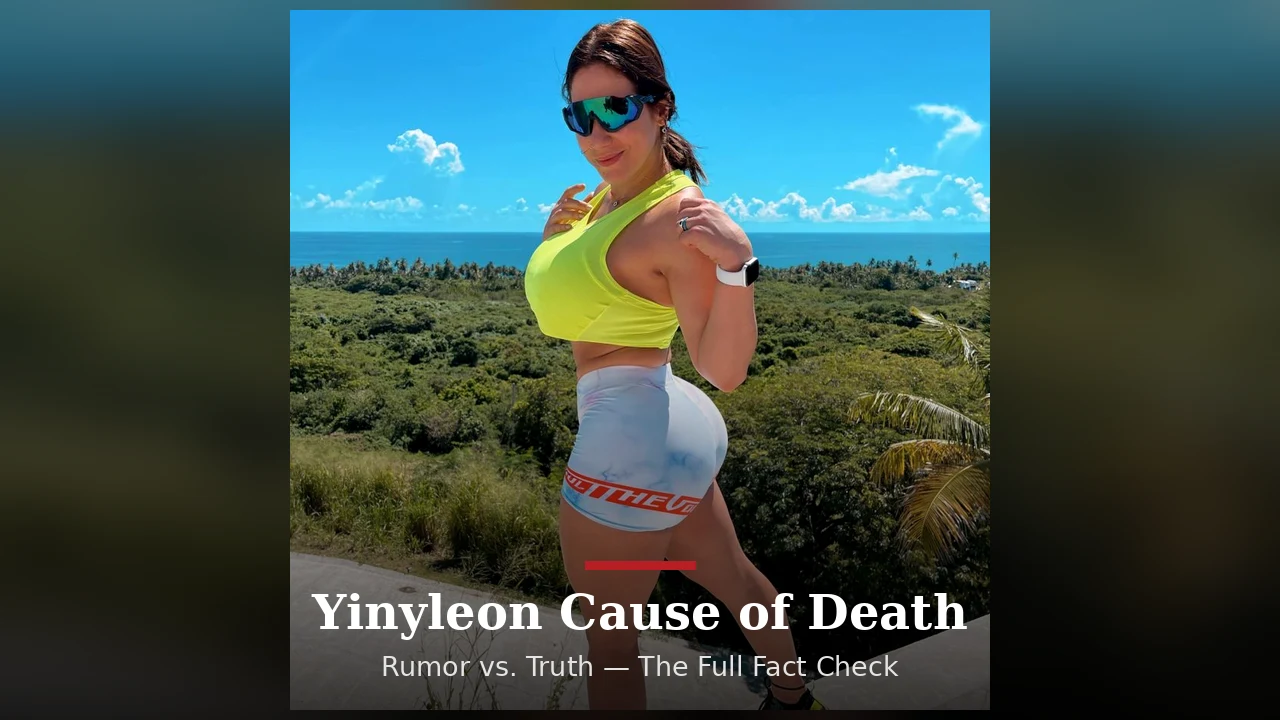
Yinyleon Cause of Death: The Truth Behind the Viral Rumor
If you have landed on this page after searching for “yinyleon cause of death,” here is the honest answer up front: Yinyleon is alive. There is no cause of death to report, because no death ever happened. The phrase “yinyleon cause of death” trends periodically only because of a viral internet hoax that began in early 2024, and every version of that story has been thoroughly debunked by the complete absence of any evidence.
Death hoaxes like this one are a strange and unpleasant feature of the modern internet. A content creator goes quiet for a few days, an anonymous account posts a “rest in peace” message, and within hours thousands of people are searching for a “yinyleon cause of death” that does not exist. This article lays out exactly where the rumor started, how it spread, why each supposed cause of death is false, and how you can tell the difference between a real report and a fake one the next time a similar story appears in your feed.
Quick Facts
| Field | Detail |
|---|---|
| Name | Yinyleon |
| Known As | Yinyleon |
| Profession | Content creator and social media influencer |
| Following | Millions of followers across social media platforms |
| Rumor Started | Early 2024 |
| Status | Alive |
| Verdict | Hoax — no cause of death exists |
Where the “Yinyleon Cause of Death” Rumor Started
Like most viral death hoaxes, this one did not come from a newsroom, a family statement, or any official source. It began with anonymous posts on online forums and message boards in January 2024, where a handful of accounts claimed that Yinyleon had passed away. Those early posts were ignored by most people at the time, and they contained no names of hospitals, no dates of funeral arrangements, and no links to any credible reporting — because there was nothing real to link to.
The story changed in February 2024, when short tribute-style videos began circulating on TikTok. These clips used emotional music, slow-motion footage, and on-screen text suggesting that the creator had died, and they were shared thousands of times by users who assumed someone else had already verified the claim. From TikTok, the rumor spilled over onto Instagram and Facebook, where reposted clips and “RIP” captions kept the cycle going. By March 2024 the phrase “yinyleon cause of death” was a trending search term, even though not a single police report, hospital statement, or reputable news outlet had confirmed anything at all.
Timeline of the Hoax
| Date | Event | Platform |
|---|---|---|
| January 2024 | Anonymous posts first claim Yinyleon has died; posts are largely ignored | Online forums |
| February 2024 | Tribute-style videos go viral, pushing “yinyleon cause of death” searches | TikTok |
| March 2024 | Rumor spreads globally; fans post grief messages and condolences | Instagram and Facebook |
| 2024 onward | Yinyleon continues posting actively on her official social channels | Her official accounts |
| Periodically since | Old tribute videos resurface and restart the search cycle | TikTok and repost accounts |
The False Claims, Debunked One by One
Over the course of the rumor’s life, several different versions of a “yinyleon cause of death” have circulated. Each one sounds dramatic, but none of them has ever been supported by a single piece of verifiable evidence. Here they are, examined in turn.
The Cancer Claim — FALSE
The most commonly repeated version of the story claimed that Yinyleon had died after a long battle with cancer. Some posts even described treatments, timelines, and hospital stays, all written with the confident tone of someone reporting facts. In reality, no cancer diagnosis was ever announced by Yinyleon or anyone connected to her, no medical records or doctor statements were ever produced, and no credible health publication or news outlet ever reported such an illness. The entire story was invented, detail by detail, by accounts chasing engagement.
Health-related death rumors spread easily because they trigger genuine sympathy. When readers see a “yinyleon cause of death cancer” headline, their emotional response often arrives before their critical thinking does, and they share the post before asking who wrote it. But sympathy is not evidence, and the total absence of any medical documentation means this claim can be dismissed entirely.
The Accident Claim — FALSE
Another version of the hoax claimed that Yinyleon had died in a sudden, tragic accident. The specifics varied from post to post — one account suggested a car crash, another hinted at something else entirely — which is itself a red flag, since real accidents produce consistent, checkable facts. A genuine fatal accident generates police reports, emergency service records, local news coverage, and often traffic camera footage or witness statements, all of which are matters of public record.
In the case of the supposed “yinyleon cause of death” accident story, none of those things exist. No police department anywhere has filed a report matching the claims, no newsroom has covered such an incident, and no witness has ever come forward. The story was assembled from nothing and repeated by accounts that never attempted to verify it.
The Health Complications Claim — FALSE
A third version kept things deliberately vague, suggesting only that Yinyleon had suffered “sudden health complications” overnight. Vagueness is a classic hoax technique: without specific details, there is nothing concrete for a reader to check, and the ambiguity lets each reader fill in their own assumptions. Real reporting on a real death names the condition, the hospital, the date, and the sources, precisely because journalists know their claims will be scrutinized.
The health-complications version of the “yinyleon cause of death” rumor offered none of that. There was no named medical condition, no timeline of any health decline, no hospital identified, and no doctor quoted anywhere. Meanwhile, Yinyleon’s actual public presence told the opposite story — she remained active and healthy, with her social media showing regular content and normal engagement throughout the period in which she was supposedly gone.
Why the Hoax Spread So Fast
Understanding how a baseless rumor travels is just as important as debunking it, because the same mechanics will power the next hoax. The “yinyleon cause of death” story spread through a combination of platform design, human psychology, and profit motives, and each factor amplified the others.
Social media algorithms reward strong emotional reactions, and few things provoke a stronger reaction than a sudden death. Sadness, shock, and outrage all drive clicks, comments, and shares, so the platforms surfaced tribute videos to millions of users before any fact-checker had a chance to intervene. Creators who reposted the rumor were not necessarily malicious — many were simply riding a trending topic for views — but the algorithmic boost meant that engagement farming dressed itself up as breaking news.
Morbid curiosity played its part as well. People develop strong emotional attachments to the creators they follow every day, a phenomenon psychologists call a parasocial relationship, and the idea of losing one of those figures feels genuinely upsetting. That emotional charge short-circuits the normal instinct to verify, so thousands of users searched for “yinyleon cause of death” and shared the results without pausing to ask whether any of them came from a trustworthy source.
Finally, the rumor thrived in an information vacuum. In the early days of the hoax, there was no immediate, widely distributed correction from an official channel, and search engines kept surfacing older rumor-based articles simply because they were optimized for the exact phrase people were typing. Without a clear, authoritative statement pushing back, speculation filled the gap — and the same old TikTok videos keep being rediscovered by new users, which is why the search term still resurfaces periodically.
The Real Impact of Death Hoaxes
It is easy to dismiss a viral rumor as harmless internet drama, but false death reports have real consequences for real people. For the fans who believed the “yinyleon cause of death” story, the experience was genuinely distressing — many posted heartfelt tributes and condolence messages, only to discover later that they had been grieving over fiction. That kind of emotional whiplash erodes trust, both in the platforms where the rumor spread and in online news more generally.
The impact on the creator is worse. Imagine waking up to find thousands of strangers discussing your supposed cause of death, while friends and relatives receive panicked phone calls from worried family members. Beyond the personal distress, there are professional costs: if brands, partners, or collaborators believe a creator is no longer active, it can create confusion in contracts and business relationships. A hoax also clutters the internet with junk content, making it harder for genuine fans to find real updates about the creator’s work.
This is not a new phenomenon, either. Similar false “RIP” trends have targeted countless public figures over the years, from musicians to athletes, and in almost every case the pattern was identical: an unverified claim, a wave of emotional sharing, and a slow, quiet correction that never traveled as far as the lie. The “yinyleon cause of death” episode is simply one more entry in that long and unfortunate tradition.
How to Spot a Fake Celebrity Death Story
The next time a shocking death claim appears in your feed, run through this checklist before you believe it or share it. It takes less than a minute, and it would have stopped the “yinyleon cause of death” hoax in its tracks.
- Check who is reporting it. A real death is covered by established news organizations with named reporters, not only by anonymous accounts, repost pages, and forum threads. If no credible outlet has the story, treat it as unverified.
- Look for an official statement. Families, representatives, and verified social media accounts are the authoritative sources on a person’s status. The absence of any official confirmation is a strong signal that the story is false.
- Ask for specifics. Genuine reports include checkable details: dates, places, hospitals, and named sources. Claims that stay vague — “sudden health complications,” “a tragic accident” with no location — are designed to evade verification.
- Be suspicious of emotional packaging. Tribute-style videos with sad music and dramatic on-screen text are a format, not evidence. Hoax creators deliberately use this style because it discourages critical thinking.
- Search the person’s own accounts. In the case of the “yinyleon cause of death” rumor, a quick look at her official channels showed normal, ongoing activity. Recent posts from the person themselves are the single strongest proof that a death rumor is false.
- Watch out for recycled content. Old tribute videos get re-uploaded and re-shared months or years later, making an old hoax look like breaking news. Check the original upload date before reacting.
Frequently Asked Questions
Is Yinyleon dead?
No. Yinyleon is alive. The death reports were a hoax that began circulating in early 2024, and she has remained active on her official social media channels throughout. Any page claiming otherwise is repeating an unverified rumor.
What was Yinyleon’s cause of death?
There is no cause of death, because she has not died. Versions of the rumor have mentioned cancer, accidents, and sudden health complications, but none of these claims has ever been supported by any evidence — no police reports, no medical records, and no credible news coverage exist for any of them.
Where did the “yinyleon cause of death” rumor start?
It began with anonymous posts on online forums in January 2024, then went viral on TikTok in February 2024 through tribute-style videos that were shared without verification. From there it spread to Instagram and Facebook, and old clips continue to resurface periodically, which is why the search term keeps trending.
Did any official source confirm the rumor?
No. No family member, representative, hospital, police department, or credible news outlet has ever confirmed a death. The only “sources” for the story were anonymous social media accounts and engagement-driven repost pages, none of which provided verifiable evidence.
Why do people keep searching for “yinyleon cause of death”?
Search interest resurfaces whenever old TikTok tribute videos are rediscovered and re-shared by users who assume the news is current. Search engines also keep surfacing older rumor-based articles because they are optimized for the exact phrase, which restarts the cycle for each new wave of curious readers.
What should I do if I see the rumor being shared?
Do not share it further, and consider pointing the poster toward the creator’s official channels, where her ongoing activity speaks for itself. Reporting the post as false information on the platform also helps limit how far the next wave of the hoax can travel.
Conclusion: Check the Source, Not the Trend
The “yinyleon cause of death” saga is a textbook example of how quickly fiction can outrun fact online. A few anonymous posts, a wave of emotional TikTok videos, and an algorithm tuned for outrage were all it took to turn a living person into a trending obituary. The truth, stated plainly one more time, is that Yinyleon is alive and well, and every supposed cause of death attached to her name was invented out of nothing.
Celebrity comparison stories and rumor-driven searches are a constant feature of entertainment coverage, from honest explainers like our look at Audrey Hepburn and Michael Phelps to deep dives such as Frank Sinatra and Kendall Jenner. The difference between those pieces and the “yinyleon cause of death” rumor is verification: real details from real sources. Before you believe the next viral claim, check the official channels, look for named sources, and remember that the loudest story in your feed is not always the truest one.



One thought on “Yinyleon Cause of Death: The Truth Behind the Viral Rumor”